
Is it Time for a Sweat Test?
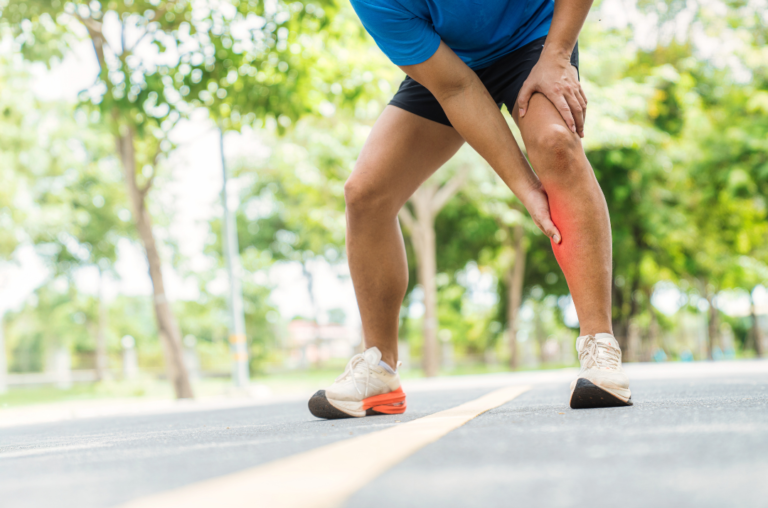
Ironman Tulsa in 2022 was the final straw. I was less than a mile from the finish line of the marathon and could just about hear the voice of the announcer calling racers across the line. But I was stopped under a highway bridge, doubled over in pain trying to massage out a cramp in my left hamstring as sweat stung my eyes.
It was a scene too often repeated in my racing career: late-run cramps threatening my finish. I thought I had been doing all the right things – downing electrolyte drinks, taking salt tablets, training in the heat. After Tulsa, when I finally took a hard look, it turned out that I was way off the mark. What I should have done long ago was a simple sweat test.
Once I did, my cramps on race-day all but disappeared. If cramps are something you struggle with, here’s how to do that test so you can run strong all the way to the finish.
Take the Test, Do the Math
Researchers are not entirely certain what causes muscle cramps, but one major component appears to be a loss of electrolytes like sodium. We lose these critical elements through our sweat, something that we triathletes do a lot of.
To get out of the cramp zone, the key is to figure out how much sodium we are losing and make sure we are replacing it.The test is quite simple if you have a reasonably accurate bathroom scale (digital is best). Before a workout, weigh yourself without any clothing on. During the run or bike, keep track of how much fluid you drink. After the workout, strip down, towel yourself dry, and reweigh. That’s it.
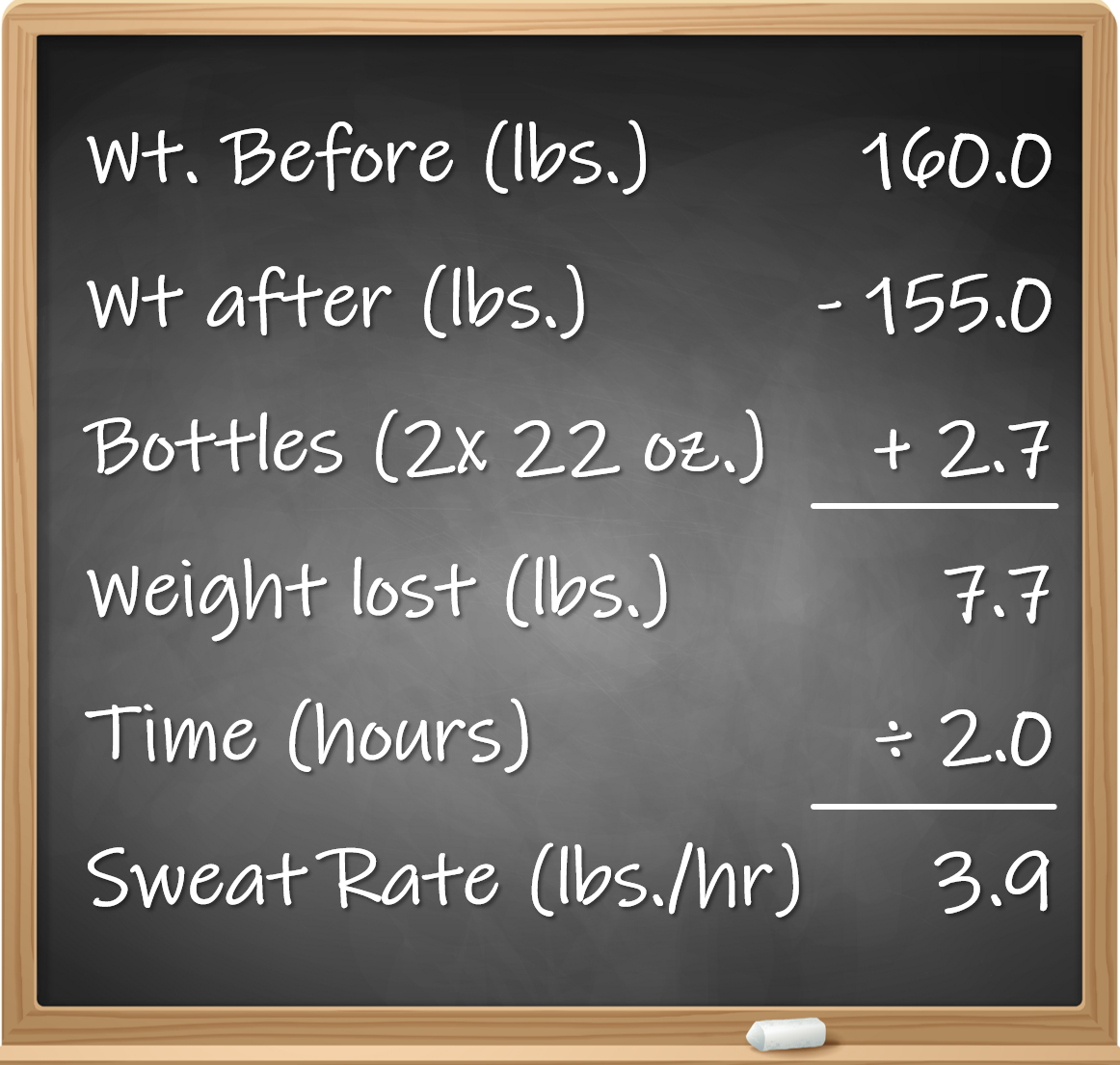
For the math, just subtract your second weight from your first, add the weight of any liquids consumed, and that is the weight you lost during your workout [1]. Divide this by time in hours, and that gives you your hourly sweat rate.
Sweat loss = Pre-Exercise weight – Post-Exercise weight + Fluid Consumed
Sweat rate = Sweat loss / Time in hoursExample.
If you weigh 160 lbs. before a two-hour ride, drink two 22-oz. bottles of water during the workout, and weigh 155 lbs. after the workout, the math says that you would have lost 7.7 lbs. Dividing that by the number of hours gives you 3.9 lbs. of sweat lost per hour.
That’s your sweat rate. Now all we have to do is sort out how much sodium you lost along with all that sweat.
Calculate Sodium Needs
One study of 506 moderately fit athletes determined that every liter of sweat contains about 826 milligrams of sodium [2]. If we convert our sweat rate into liters (1.77 l.) and multiply by 826mg, we get an estimated sodium loss rate of 1,462 milligrams per hour.
That’s the hourly amount of sodium our bodies need to continue to function, and how much we need to replace.
This is a test you should conduct several times for both the bike and the run. Your sweat rates will vary based on heat and humidity, as well as the type of workout. It will likely be higher for your run than your bike, and you will sweat more on hot days than cool ones.
Getting it Down
Now that we know what we need, we just have to get it into our system. Brands like Mortal Hydration and Precision Hydration, both of whom have partnered with Ironman, provide 450-500 mg per bottle at regular strength. That makes the calculation easy: if these were your numbers, all you have to do is drink about three bottles per hour.
There are other sources of sodium as well. For example, SaltStick capsules contain 215 mg each, while Precision Hydration capsules are packed with 250 mg. You can also find gels, chewables, and drink tablets with enhanced sodium content. Some people even swear by pickle juice, which has about 270mg per ounce.
What you ultimately go with depends on your personal preference, and it is best to experiment with various combinations during training well before race day. Start with what will be offered on the racecourse. If you like it, that makes the logistics easy.
As a heavy sweater, for hot races I’ll typically try to get down three bottles per hour, and supplement with two salt tablets.
Sweat Test - The Takeaway
If you don’t want to find yourself doubled over in pain under a highway bridge when the finish line is just around the corner, the time to act is now. Do a few simple sweat tests and knock out the math. When you know how much sodium you are actually losing, you will know how much you need to replace so that you can run strong all the way to the tape.
Of course, if you want a really accurate answer, a lab test is your best bet, since concentrations can vary significantly among individuals. Even so, this simple test can get you much closer to your true needs than simply guessing, as I had been doing.
When I finally sat down and did the math after Tulsa, I discovered that my body was getting only about one third of the sodium it actually needed to function properly. After four hours of running in the heat, it’s no wonder I was hobbling with cramps by the end; the miracle may be that it didn’t happen sooner.
Happy Training!
Notes:
1. To dial this in further, if you take a nature break during the workout, count your flow in seconds; males urinate about 13ml/second, women and men over 50 closer to 10ml/second. Subtract this weight from your total. (Kumar et al 2009 Age, gender, and voided volume dependency of peak urinary flow; Table 4).
2. If, like me, your clothes are crusted white with salt after a long workout, you probably have a greater concentration of sodium in your sweat and may want to use a higher number, like 1,000 or 1,100 mg. (Baker et al 2016: Normative data for regional sweat sodium concentration and whole-body sweating rate in athletes.
2 Responses