
When the Going Gets Tough: Three Tips for Mental Strength from Madam Pele
Kona, 2022. It’s the day before the Ironman World Championships and I’m doing my final gear prep when an email from Jodie pops into my laptop mailbox. I stop everything to open it. We met in Kona in 2019, where she has competed three times. She knows a thing or two about racing in Hawaii.
Her note was long and interesting and full of encouragement for my race, but one section in particular caught my attention. I think it holds a huge key to finding mental strength, and is well-worth sharing here. In any Ironman race, you can be certain that the going will get tough at some point. When that time comes, here’s one way to frame the challenge to help you get through it.
Jodie's Words
When I first met Jodie at the athlete dinner before the 2019 race, she confided in me, a total stranger, that she was fearful about the race. She worried about the wickedly fast descent from Hawi, the dangerous crosswind gusts blowing in from the sea, and the heat that saps your strength and clouds your thinking. She confessed that her fears had held her to middle-of-the-pack finishes in two previous attempts at Kona.
Yet that year, she went on to finish in the top ten of her age group in the world. What she sent me in that email was part of the secret to how she managed to unlock her full potential on race day.
Here is what she wrote:
Madam Pele is not out there to defeat you. She is out there asking you to bring the best of yourself.
In the beautiful simplicity of this statement there are three big ideas to grab on to that can help you be mentally strong on race day.
Give it a Name
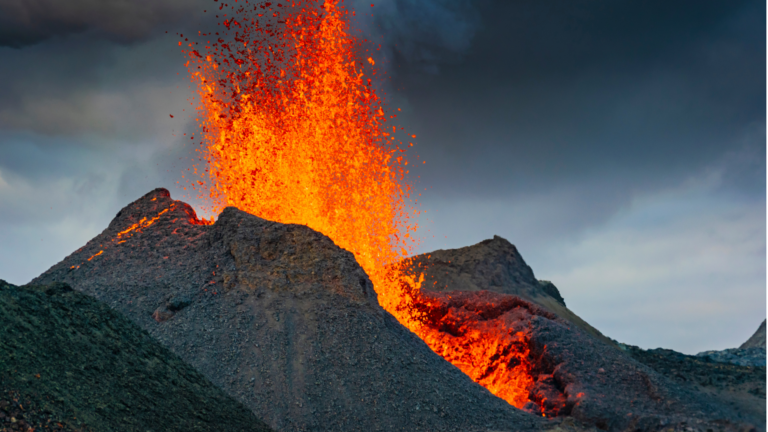
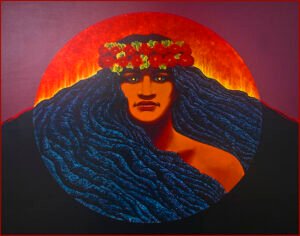
Jodie starts by giving the challenges a name, “Madam Pele.” In Hawaiian tradition, the islands were created by the goddess Pele. Like the volcanoes that dominate the land, Pele is known to be mercurial, powerful, intoxicatingly attractive at times, and mercilessly fierce at others. Many racers credit her for the often difficult, sometimes unpredictable conditions on race day on the Big Island.
By giving the challenge a name she personifies it, turning it into something we can form a relationship with. In naming the challenge, we move from being a victim of something beyond our control, to a participant in a conversation about what lies ahead.
It's Not a Fight
Second, when she says “Pele is not out there to defeat you” she removes the idea of confrontation. The phrase “mental toughness” engenders a sense of conflict. When we want to be tough, we are inclined to adopt a combative approach to the challenges we face; we prepare ourselves to “battle it out.” But Jodie’s words suggested something entirely different.
Her idea is that it isn’t about combat, it’s about partnership. The difficulties we face on race day are not an attempt to wear us down, they are an opportunity for us to grow stronger. We can think of our “Pele” in the same way as we might a coach who programs tough workouts, or a teacher who assigns difficult homework. The challenges they present are not attempts to bring us to failure, but encouragement for us to reach farther and dig deeper. In the process, we develop greater capacity, add new skills, and become more capable versions of ourselves.
There is Always More
And third, implicit in Madam Pele’s attitude, is the idea that we have greater capacity than we often give ourselves credit for. It can help to recognize that through natural selection, humans have become superb endurance athletes. We may not be as strong or as fast as other mammals, but we are supremely well adapted to keep going mile after mile despite brutally hot conditions [1]. In my view, as that physical ability evolved, we must have developed the mental capacity to go the distance as well. We were made, mentally and physically, to endure.
But even when we think we have reached our limit, we aren’t finished. In one study that demonstrated this, subjects were directed to pedal an exercise bike to exhaustion. At the bike’s set resistance, they lasted an average of only 12 minutes. Moments after they had quit, researchers directed them to pedal for five seconds as hard as they could. The riders were able to produce three times the power that they did in the longer test [2]. Clearly there was more left in the tank, despite believing they were done.
If the muscles were still capable, it must have been the mind that made them stop, having reached some perceived limit of performance. To push that line farther out, it can help to convince the mind that we are not as exhausted as we thought. Strategies for doing this might include any of these:
Mental Strength - The Takeaway
Even if you are not racing on the Big Island, you can be sure that Pele is nearby, and chances are she will make her presence known at some point. The thing to keep in mind is that when the going gets tough, she isn’t trying to make us quit. Quite the opposite. The challenges she throws our way are a display of her confidence in us to be strong and overcome.
When you find yourself in the midst of a struggle on race day, give it a name, make it a partner, and remember that you always have more. And as you continue to put one foot in front of the other, if you can find the energy, look up. Chances are you will catch Madam Pele smiling.
Happy Training!
Notes:
1. Lieberman, et. al. 2009. Brains, Brawn, and the Evolution of Human Endurance Running Capabilities. P. 78.
2. Van Sprundel, Mariska. 2021. Running and the Science of Mental Toughness. MIT Press Reader, adapted from Running Smart: How Science can Improve Your Endurance and Performance. MIT Press.
3. Pele photo Credit: Ron Cogswell via flickr; no changes made.