
Pre-Hab Secrets: How to be Stronger Than Achilles
In Greek myth, when Achilles was born a prophecy foretold that he would achieve everlasting glory, but die young in battle. To avoid this fate, his mother took him to the underworld and dunked him in the River Styx. The magical waters made him invincible everywhere they touched him. The only problem? The water never touched his heel where she held him.
Fast forward, and Achilles is the hero of the Trojan War, fighting with boldness, daring, and even arrogance. He is seemingly invincible on the battlefield until a poisoned arrow hits him in the heel, his one weak spot. Suddenly he’s down for the count.
But it was going so well!
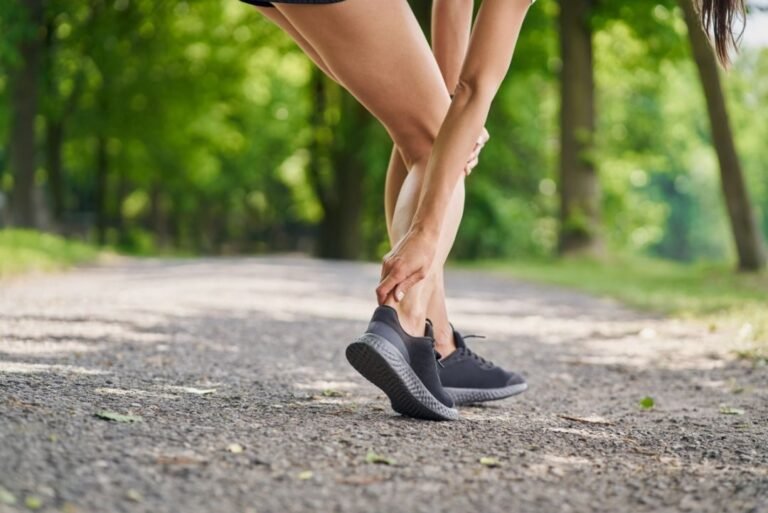
I’ve said the same words, maybe you have too. You’re at the peak of a training cycle, everything is going great, maybe you even feel bullet-proof, but then suddenly there’s an ache in your tendon behind the ankle. In a flash, you are on the sideline just as the big race is approaching.
Achilles’ mother never told him about the whole ankle thing, so he didn’t get a chance to do anything to protect his heel. If you are a runner, here’s your warning: you have a 24% chance of having to deal with an injury to the Achilles tendon sometime in your career. [1]
What can we do to protect ourselves from this fate?
Eccentric Stretching
Tendons like the Achilles are made up of collagen – rope-like fibers that provide strength and stability. Left to their own devices, these fibers form gradually and randomly, but over time, they will align in the direction that they are stressed.
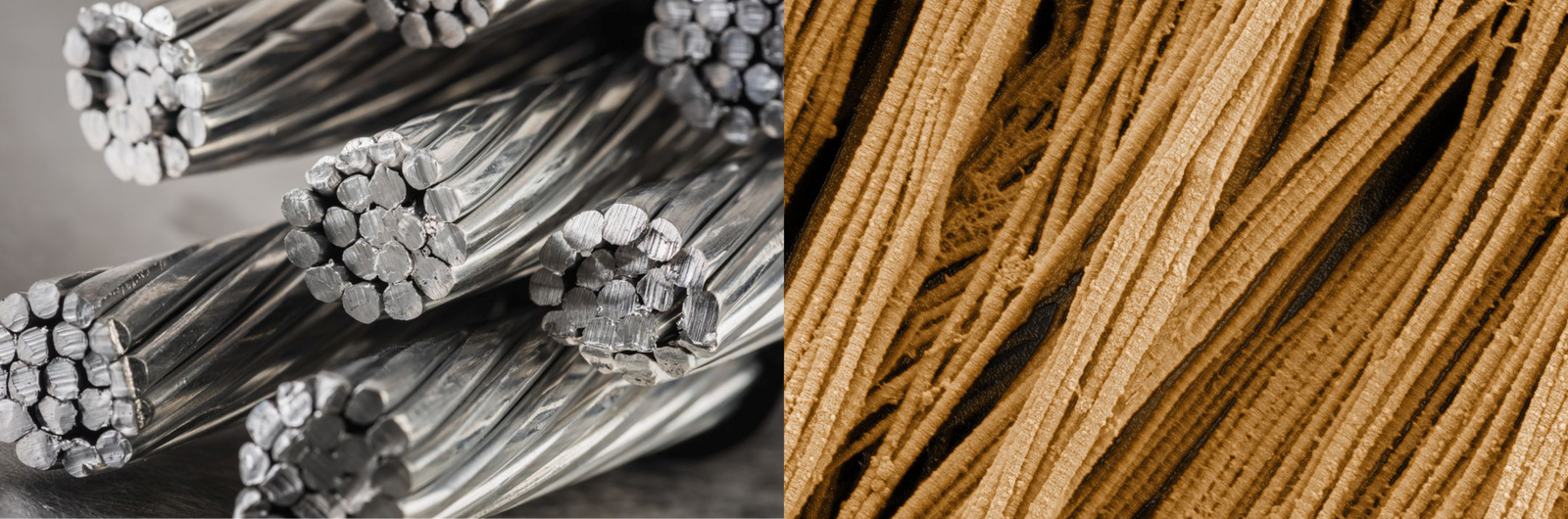
Image: Left – steel cable; Right – collagen under an electron microscope [2]
If we want to strengthen the Achilles to prevent future injury, we can add a short routine that stimulates collagen production and prompts it to align correctly from the beginning. The way to do this is through eccentric stretching. This involves putting a load on the tendon as you lengthen the muscles around it.
When repeated over time we can gradually thicken and increase the density of our collagen fibers, making them less susceptible to injury in the first place. [3]
Post-Run Pre-Hab
One simple exercise that achieves this I call heel drops. Imagine facing a set of stairs and standing tiptoe on one foot, with the ball on the edge of a step. Slowly lower your heel for three seconds until it is as low as it can go without pain. Hold it there for a three-count. Use your opposite foot to help lift your body back up to tip-toe and then repeat the slow lowering process again. That’s it.
Do three sets of 10-15 for each calf, with a minute or two between each set. Also do at least one of these sets with your knee slightly bent – the change in angle helps reach deeper into other parts of the calf muscle and tendon.
It is best to do these right after a run while your muscles and tendons are warm and your collagen is open to suggestion about where to line up.
Gradually adding to the load on the tendon by holding weights can further thicken and increase the density of the collagen fibers, making them less susceptible to injury in the first place.
The Takeaway
Doing heel drops may not be as dramatic as being dunked head-first into the River Styx, but that’s not what we are after. We’re just trying to not be part of that 24% that gets hit.
When I was struck in the heel by Achilles tendinopathy seven years ago, I used eccentric stretching exercises like heel drops to aid my recovery. It took a while, but I got better. Now I do them after every run.
While going slowly up and down on my toes, I envision adding more wires to the steel cable that connects my ankle to my calf. I’m not looking for everlasting glory, I just want to stay in the fight. I hope these help you do the same.
Happy Training!
Ken
[1] Saini, Sundeep S., et al. “Achilles tendon disorders.” Journal of Osteopathic Medicine 115.11 (2015): 670-676. https://www.degruyterbrill.com/document/doi/10.7556/jaoa.2015.138/html
[2] Photo Credit: steel cable – Canva; Collagen Fibers – Tom Deerinck, National Center for Microscopy and Imaging Research (NCMIR) https://www.nigms.nih.gov/image-gallery/3735
[3] Galloway, Lalley, Shearn. “The role of mechanical loading in tendon development, maintenance, injury, and repair.” J Bone Joint Surg Am. 2013 Sep 4;95(17):1620-8. doi: 10.2106/JBJS.L.01004. PMID: 24005204; PMCID: PMC3748997. https://pmc.ncbi.nlm.nih.gov/articles/PMC3748997/